 Login
Login




The electrification of freight transport is gaining momentum. More companies are testing their first vehicles, building pilot fleets or planning the next step in lower-emissions transportation. At the same time, it’s becoming clear that a vehicle alone doesn’t determine whether an electric truck will prove itself in everyday use. Just as important is the question of whether it can be charged while on the road.
After all, anyone who wants to use electric trucks needs more than just technical range. They require predictability, access to suitable charging points along routes taken, and a network that they and their dispatchers can rely on.
Table of Contents
Electric mobility in heavy-duty transport requires reliable infrastructure
For long-haul transport, charging on the road is what matters most
UTA eCharge: Making charging on the road easier
Strong partners make all the difference
It’s not just the charging infrastructure that matters, but also access to it
Electric mobility doesn’t end at the public charging station
Germany plays a key role
Conclusion
Electric mobility in heavy-duty transport requires reliable infrastructure
In the passenger car sector, public charging infrastructure is well established. In the transportation sector, the requirements are different. Vehicles follow fixed routes, time windows are tightly scheduled, rest periods must be observed, and supply chains must not be disrupted. If a charging station is unavailable or located far off a route, it can quickly become an operational problem.
That’s why the discussion surrounding electric trucks has become an infrastructure issue. What matters is not just whether charging is possible, but where, how quickly, and how easily the charging process can be integrated into daily operations. For logistics companies, this means the denser and more relevant the charging network, the better electric mobility can be integrated into existing processes.
Current reports, such as from FAZ, note that electric trucks are on their way into everyday use, but that without reliable charging infrastructure, their potential remains limited.
(Source: Frankfurter Allgemeine Zeitung, “Across Germany in an Electric Truck: Heavy on Power”)
For long-haul transport, charging on the road is what matters most
Long-haul transport is where the true practicality of electric commercial vehicles is put to the test. This is because it’s not enough to make charging points available in isolated locations. They must be located along major transportation corridors, meet the requirements of heavy-duty commercial vehicles, and integrate as seamlessly as possible into route planning.
From our perspective, this is where one of the most important drivers for further development will lie: in easy access to public charging infrastructure along a route. Road charging is no longer a secondary issue, but rather a prerequisite for electric trucks to function effectively in everyday operations.
UTA eCharge: Making charging on the road easier
With UTA eCharge, UTA Edenred helps companies implement electric mobility in a practical way. A key component is access to public charging infrastructure throughout Europe via the UTA eCard and the UTA eCharge app. The network provides access to more than {$charging_stations-europe-en} charging points in {$charging_countries} countries.
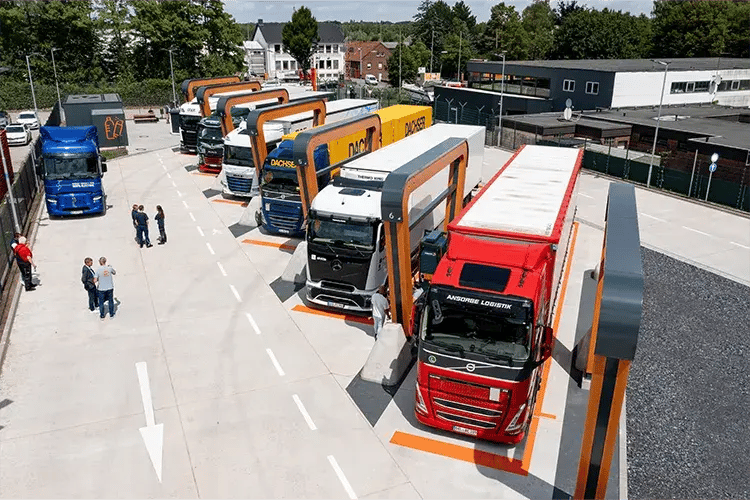
For electric trucks, the network also includes approximately 420 truck-compatible stations – a number that is continuously growing. This creates a better foundation for companies that want to use electric commercial vehicles not only for local transport but also on longer routes.
It’s not just about scale, but about usability: Drivers need to be able to find charging points quickly, dispatchers need greater certainty in planning, and companies expect a solution that keeps administrative overhead manageable. UTA eCharge addresses this intersection of infrastructure, digital access and operational simplification.
Strong partners make all the difference
A resilient charging network for heavy-duty vehicles doesn’t happen overnight, nor can it be built by individual providers alone. This makes partnerships that make infrastructure available where it’s needed all the more important.
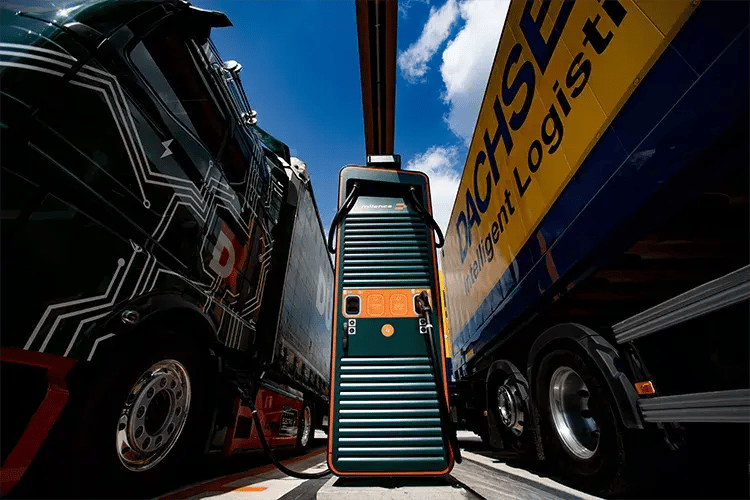
One example of this is our collaboration with Milence. A portion of the truck-compatible charging points in the UTA Edenred network are located at ultra-fast charging stations operated by this joint venture between Daimler Truck, TRATON GROUP and Volvo Group. For fleet operators, this sends a clear signal: The expansion of charging infrastructure for heavy-duty trucks is being driven forward in a targeted manner – and it’s increasingly geared toward the requirements of long-haul transport.
For customers, this means greater confidence in route planning. After all, every additional, accessible station increases the operational readiness of electric trucks in real-world conditions.
It’s not just the charging infrastructure that matters, but also access to it
In everyday use, what ultimately matters isn’t just how many charging points there are, but how easy they are to use. A good solution should create transparency, make availability visible and simplify the process for both drivers and fleet managers.
The UTA eCharge app enables users to find charging points, check availability and manage charging processes. This is a real advantage in freight transport where time windows are tight and routes are planned precisely. It helps reduce operational uncertainties and better integrate charging stops into the workflow.
Electric mobility doesn’t end at the public charging station
As important as charging on the go is, for many companies it’s only part of the strategy. Those electrifying their fleets usually have to consider various scenarios simultaneously, such as charging at the depot, on corporate premises, or within other operational facilities.
UTA Edenred takes a more comprehensive approach with UTA eCharge – one that goes beyond public charging. This includes solutions for on-site charging infrastructure as well as ways to better monitor usage, energy consumption and emissions. This is particularly important for companies that are gradually electrifying their fleets. After all, the transition to e-mobility is generally not a one-time change, but a process.
Germany plays a key role
Germany is one of the most important logistics markets in Europe. Accordingly, well-functioning charging infrastructure along national and international transport corridors is of great importance. If electric trucks are to become widely adopted here, a network is needed that not only grows but is developed along actual traffic flows.
In our view, the challenge for the coming years is expanding charging infrastructure in such a way that it’s not merely available, but usable – for different fleet models, operational profiles and route patterns.
Conclusion
Electric trucks are evolving from pilot projects into a viable option for freight transport. For this transformation to succeed, reliable road infrastructure is required. A dense, relevant and easy-to-use charging network is one of the most important prerequisites.
With UTA eCharge, UTA Edenred is laying the foundation through access to a Europe-wide public charging network, the integration of truck-compatible charging points, and strong partners such as Milence. This way, technical possibility is becoming operational reality.
Download the UTA eCharge app now!