 Login
Login



The decision between an electric car, a hybrid and a traditional internal combustion engine vehicle is complex and affects not only the type of vehicle but also the company’s overall mobility strategy – from costs and charging infrastructure to integration with digital systems and employee engagement.
In this article, we compare three different powertrain concepts. The goal? To provide a basis for decision-making regarding a future-proof and cost-effective fleet strategy.
A comparison of propulsion concepts
The powertrain you choose should depend on your company’s requirements. Here, we compare three concepts:
Electric vehicles (BEV)
Electric vehicles produce no local emissions and offer low operating costs. Thanks to tax incentives and reduced maintenance costs, they can be economically attractive. The biggest challenges are charging infrastructure, which is not yet available everywhere; higher purchase costs; and longer charging times – although the latter is increasingly being mitigated by rapid charging technologies.
Hybrid vehicles (HEV, PHEV)
Hybrids combine electric range for short trips with the flexibility of an internal combustion engine. Electric mode is particularly useful for vehicles that cover short distances. Plug-in hybrids offer greater savings potential, but only if they are charged consistently. Otherwise, the additional complexity, weight and maintenance requirements outweigh the benefits.
Internal combustion engines (petrol, diesel)
Internal combustion engines offer proven technology, long range and widespread infrastructure. They are often less expensive to purchase and remain economical, especially at high mileage. In the long term, however, there is a risk of restrictions due to regulations, environmental requirements and higher operating costs, particularly as a result of CO2 pricing.
Cost-effectiveness and total cost of ownership (TCO)
An analysis focused solely on purchase price falls short. What matters most is cost-effectiveness over a vehicle’s useful life:
- Electric vehicles offer advantages in terms of electricity prices, maintenance and taxes, but are more expensive to purchase.
- Hybrid vehicles can be cost-effective if they are frequently driven in electric mode. Without charging, their efficiency drops significantly.
- Internal combustion engine vehicles are cheaper in the short term but face increasing pressure in the long term due to rising operating costs and stricter environmental regulations.
Subsidy programmes, tax incentives and real-world driving patterns have a significant impact on cost-effectiveness. A TCO analysis is therefore essential.
Infrastructure and usage profiles
Practicality depends not only on the vehicle but also on local conditions:
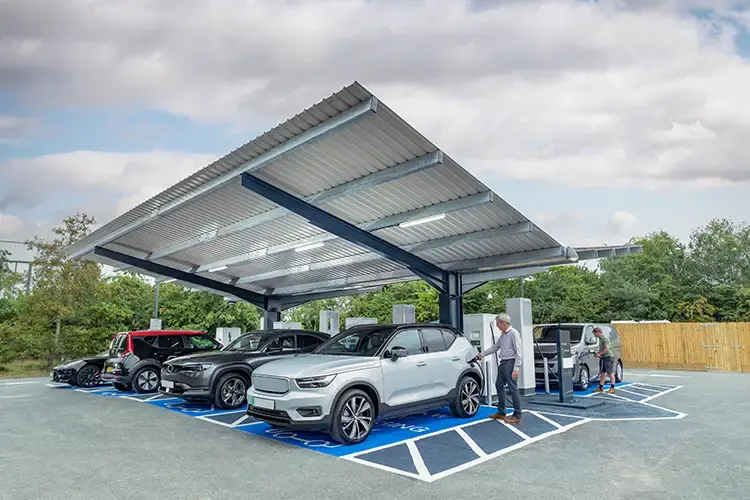
- Electric vehicles require access to charging stations – at home, at work and on the go. Investments in charging infrastructure are necessary but can pay off through tax breaks and savings on operating costs, especially if charging locations can be billed through a central platform.
- Hybrid vehicles have fewer requirements but benefit from reliable charging infrastructure.
- Combustion engine vehicles are ready for immediate use but require fossil fuels, whose prices and availability are becoming volatile.
Environmental and image factors
Switching to an alternative powertrain offers advantages beyond lower cost:
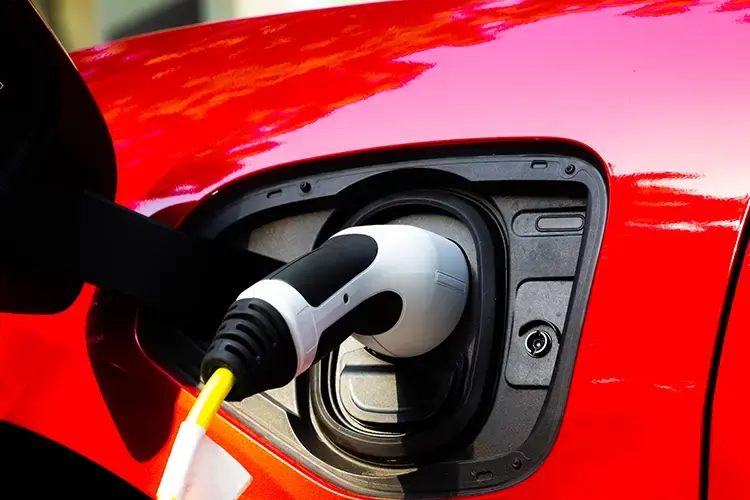
- Electric vehicles reduce emissions and improve environmental footprint, particularly when combined with green electricity.
- Hybrid vehicles offer CO2 savings when driven consistently in electric mode.
- Internal combustion engines emit the most, even though newer variants have become more efficient.
For companies with CSR goals or sustainability requirements in their tenders, the switch can be a decisive advantage. A modern vehicle policy also plays an increasingly important role in employer branding.
Which powertrain is right for your fleet?
After comparing various criteria, it’s clear there is no one-size-fits-all recommendation. The right decision depends on multiple factors:
- Electric cars are well-suited for predictable routes covering short to medium distances where charging infrastructure is available.
- Hybrid vehicles offer advantages for mixed usage profiles, provided they are charged regularly.
- Internal combustion engine vehicles can remain cost-effective when charging infrastructure is lacking or when mileage is very high.
How UTA Edenred can help
Choosing the right powertrain isn’t an isolated issue but part of a comprehensive mobility strategy. UTA Edenred helps companies develop this strategy in a well-founded and future-proof manner, regardless of whether they rely on internal combustion engines, have introduced electric vehicles into their fleet, or are planning a phased transition. UTA Edenred offers customers a comprehensive 360° solution to manage charging and refuelling processes efficiently, in compliance with legal requirements, and centrally – whether at home, on the road, or at work.
As an integrated mobility partner, UTA Edenred not only provides support for tracking and billing but also assists companies with implementation, system integration and employee training. This results in a seamless mobility concept, from consulting to digital billing.
The platform combines all functions into a single system: access to a Europe-wide charging network, management of private and company charging points, and automated billing for charging sessions.
Benefits at a glance:
- 360° mobility solution: UTA Edenred not only covers operational charging and fuel management but also offers a complete, all-in-one package: from consulting and technical connectivity and infrastructure integration, to employee training and ongoing operational support.
- One card for everything: Consistent use for all mobility requirements – whether public charging, home charging, workplace charging or simple fuelling.
- Workplace charging: Charging processes at company locations can be managed efficiently, transparently and in compliance with tax regulations – from the installation of AC and DC charging stations to intelligent load and access management, through to centralised billing. Upon request, charging points can be made available for semi-public use, with customisable rates and time-controlled access.
- Home charging included: UTA Edenred provides automated tracking and reimbursement of home charging sessions – undertaken in a legally compliant and tax-compliant manner.
- Digital transparency: Customers benefit from intuitive dashboards, reports and exportable tax data at the click of a button. Seamless integration can be provided with existing ERP, fleet management and accounting systems.