Different toll systems are used in Poland. Toll routes are partly run by the state operator via the e-TOLL system and partly by private concession holders. In the state system (e-TOLL), there is a mandatory toll for vehicles and vehicle combinations over 3.5 tonnes as well as for buses on motorways, dual carriageways and select national dual carriageways. On privately operated toll routes, all vehicles are subject to tolls.
Tolls in Poland
-
Toll charges for cars, trucks and buses – on the state e-TOLL routes for vehicles over 3.5 tonnes and buses, on privately operated routes for all vehicles
-
Route-dependent fee – based on vehicle type, weight and emissions standard
-
Electronic recording via e-TOLL – mandatory on state toll routes, additional payment options on private routes
General information
Toll provider: Krajowa Administracja Skarbowa (KAS)
The toll system in Poland supports the financing, maintenance and modernisation of the national road and motorway network. It helps ensure that Poland's traffic routes remain safe, efficient and environmentally friendly. The electronic e-TOLL system, which organises the automatic recording and billing on all toll-charged motorways, dual carriageways and select country roads, is responsible for the collection and administration of the state toll.
The toll is collected via the digital e-TOLL system: All cars, trucks and buses pay the fee depending on vehicle class, weight, number of axles and emissions standard. On privately operated motorway sections, separate tariffs or manual payment systems at classic toll booths apply in some cases. Additional fees may apply to individual bridge sections or motorway connections.
Vehicles subject to tolls
In Poland, tolls are mandatory for most vehicles on motorways and dual carriageways. Discounts or exemptions are applied mostly to low-emissions or electric vehicles.
| Valid for vehicles | Route | Payment options |
| Vehicles < 3.5 tonnes |
A1: Gdańsk–Toruń section; |
Cash/credit card or electronic |
| Vehicles > 3.5 tonnes |
A1: Gdańsk–Toruń section; |
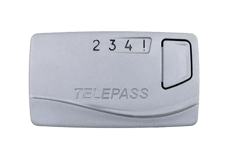
Cash/credit card or UTA One® next toll box (e-Toll System and A4 route Katowice-Krakow); Telepass EU toll box (only A4 route Katowice - Krakow) |
Trucks tolls in Poland
In Poland, road traffic is subject to a mandatory national toll. Toll routes are partly run by the state operator via the e-TOLL system and partly by private concession holders. In the state toll system (e-TOLL), there is a mandatory toll for vehicles and vehicle combinations over 3.5 tonnes as well as for buses on motorways, dual carriageways and select national roads. On privately operated toll routes, all vehicles are subject to tolls. The system is aimed at both domestic and foreign vehicle owners.
Vehicles over 3.5 tonnes subject to tolls
In Poland, vehicles with a permissible total weight of more than 3.5 tonnes are subject to tolls. These include cars with trailers, trucks, buses and heavy goods vehicles. These vehicles must have a registered on-board unit (OBU) or approved smartphone app with GPS functionality. The toll is automatically calculated via the e-TOLL system based on distance driven. On routes of private concession holders, the toll can be paid in cash, by credit card or electronically.
The toll amount depends on several factors: total weight, number of axles, emission class, vehicle type and road category. Vehicles with high emissions pay significantly more. Low-emission, gas-powered or electric utility vehicles, on the other hand, benefit from reduced tariffs.
Toll-exempt vehicles
Only a few vehicle groups, including vehicles belonging to the police, fire brigade or military, are exempt from the mandatory toll in Poland. Certain rescue and emergency response vehicles are also exempted. Agricultural vehicles, private cars or motorcycles are not required to pay the toll on e-TOLL routes unless they exceed the permitted total weight of 3.5 tonnes.
Car tolls in Poland
Poland does not charge a flat-rate toll for all roads, but many motorways, dual carriageways and select national roads are subject to a toll. The roads are operated either by the government or privately, which means that payment systems and tariffs may differ. Drivers should take this into account when planning a route, as the costs vary depending on the vehicle class and route.
Payment is mainly route-dependent, i.e., the toll is calculated based on motorway kilometres driven. On sections managed by private operators (e.g., A1, A2, A4), the toll can either be paid at a toll booth or automatically billed via the electronic Videotolling Autopay. With Videotolling, the vehicle registration number is registered via number plate recognition and the debit is made conveniently via a user account or mobile app.
In some Polish cities and regions, city toll systems are planned that are orientated towards the future environmental compatibility of the vehicle. The goal is to reduce traffic in conurbations and improve air quality.
Overview of toll routes
Routes subject to tolls in Poland include large parts of motorways, dual carriageways and select national roads, some of which are operated by the government and some privately. The A1 (Torun–Gdansk), A2 (Konin–Swiecko) and A4 (Krakowice-Krakow) motorways are particularly relevant. On these routes, all vehicles incur a toll.
The operator e-TOLL provides an up-to-date map of the toll network and information on specific toll routes on its website. More information on eTOLL routes.
Toll payment
In Poland, toll routes are partly operated by the state operator via the e-TOLL system and partly by private concession holders. Payment on the state e-TOLL routes is undertaken electronically, automatically via GPS location, number plate recognition or a registered on-board unit (OBU). Cash payment at toll booths is not possible on these routes. On privately operated routes, tolls can be paid in cash, via credit card or electronically.
For vehicles under 3.5 tonnes
Vehicles under 3.5 tonnes, such as cars or camper vans, are not subject to tolls on state-owned e-TOLL routes. On sections of privately operated motorways (e.g. A1, A2 and A4), however, all vehicles are subject to tolls. Payment can be made in cash, via credit card or electronically. In certain cases, low-emission vehicles benefit from reduced tariffs on privately operated routes.
For vehicles over 3.5 tonnes
Vehicles and vehicle combinations over 3.5 tonnes, cars with trailers, trucks and buses are subject to tolls on national e-TOLL routes. The toll is calculated depending on the route and takes into account vehicle class, weight, number of axles and emissions standard. Payment is made via on-board units (OBUs), which are automatically connected to the e-TOLL system or via authorised toll service providers. On privately operated routes, all vehicles are subject to tolls, with fees paid in cash, via credit card or electronically. For forwarding and logistics companies, e-TOLL offers central management via online portals and apps, which allows costs and vehicle data to be managed transparently.
Anyone who uses toll routes without valid payment is at risk of fines and additional administrative fees. Timely registration in the e-TOLL system as well as regular monitoring of the credit balance help to avoid costs and delays on Poland's motorways.