

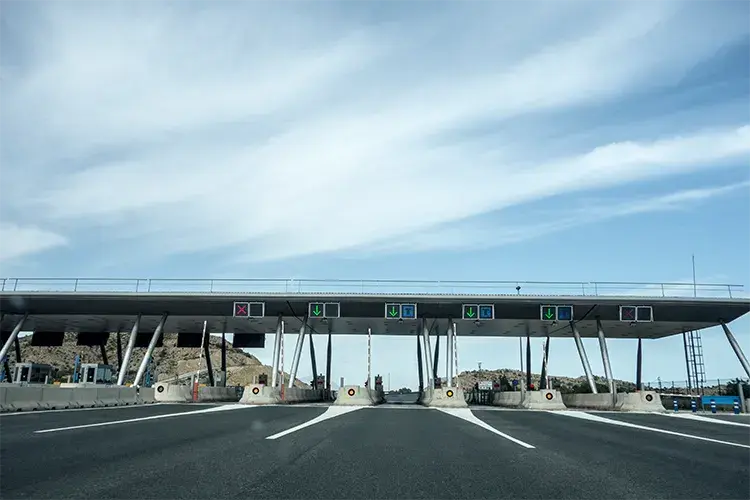
In Serbia, motorways and dual carriageways are subject to tolls for cars and trucks. Fees are charged on a route-dependent basis via a closed system with toll booths at motorway entrances and exits at which the fee must be paid. The charge can be paid in cash, by credit card or electronically via the TAG system. This allows for a faster and more comfortable journey without stopping. The toll helps fund the expansion and maintenance of the Serbian road network.
Tolls in Serbia
-
Mandatory toll for cars and trucks on motorways and dual carriageways
-
Payment in cash, by credit card or electronically via the TAG system
-
Electronic billing saves time and reduces wait times at toll booths
General information
Toll provider: Putevi Srbije
The Serbian toll system supports the financing and maintenance of the national road and motorway network. It ensures that roads remain safe, well-developed and efficient. The Serbian toll system is based on an electronic and classic system, whereby all vehicles, including cars, motorcycles and trucks, have to pay a fee depending on vehicle class, weight and kilometres driven.
Tolls are collected on almost all Serbian motorways and dual carriageways, with the exception of the A3 through Belgrade city centre. The toll is recorded and billed both at fixed toll booths and via modern electronic systems with transponders (so-called "TAGs") that allow automatic and contactless payment.
The Serbian toll system provides an efficient, transparent and fair solution for road users. Automatic registration and video surveillance ensure compliance with the mandatory toll and contribute to road safety. Drivers can choose from a variety of payment methods, including cash, credit card and electronic billing systems.
Vehicles subject to tolls
In Serbia, tolls are payable on motorways and dual carriageways for all vehicles, which are calculated based on vehicle class, number of axles, height of the front axle and total weight.
| Valid for vehicles | Route | Payment options |
| HGV > 3.5 tonnes |
Motorways (except the A3 in Belgrade city centre); dual carriageways |
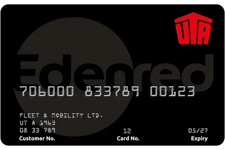
ENP OBU toll box (in postpay mode with fuel card UTA Card) |
| Passenger cars ≤ 3.5 tonnes |
Motorways (except the A3 in Belgrade city centre); dual carriageways |
ENP OBU toll box (in postpay mode with fuel card UTA Card only possible for vehicles of categories 2, 3, 4) |
Trucks tolls in Serbia
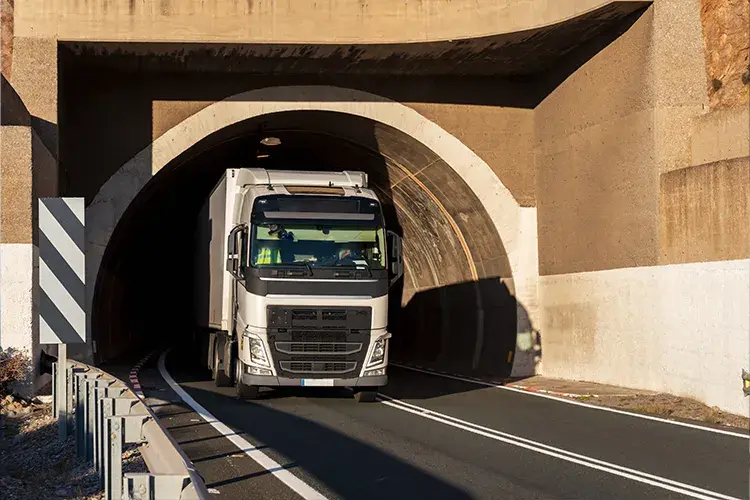
In Serbia, heavy goods vehicles are subject to tolls on motorways and dual carriageways. The country operates a class system in which the toll amount depends on the vehicle type, number of axles, height of the front axle and permissible total weight. Transport companies must register their trucks according to vehicle class and pay the toll to avoid fines.
Vehicles over 3.5 tonnes subject to tolls
In Serbia, trucks with a gross weight of more than 3.5 tonnes are subject to tolls on motorways and dual carriageways. Vehicles are divided into five classes; classes 3 and 4 are particularly relevant for trucks. The classification is based on the number of axles, height of the front axle and total weight. For vehicles above 3.5 tonnes, among other things, the height of the front axle above 1.3 metres and having at least two to four axles count.
Toll-exempt vehicles
In Serbia, there are essentially no exemptions to the mandatory toll for trucks. All vehicles, regardless of weight or drive type, are obliged to pay the toll. Special exceptions are granted for certain government or military vehicles. People with disabilities and humanitarian aid vehicles can apply for a toll exemption. Vehicles for humanitarian or agricultural use are usually subject to tolls. For trucks and heavy goods vehicles, the mandatory toll applies irrespective of the origin of the company or registration number.
Car tolls in Serbia
Vehicle classes for cars (vehicles up to 3.5 tonnes) are classified as follows:
- Class I: Cars with up to 2 axles, front axle height of up to 1.29 metres or total height of up to 1.89 metres.
- Class II: Cars with trailers or vehicles up to 2 axles and a total height of more than 1.9 metres.
- This classification determines the toll amount.
On popular routes such as the E-75 between Belgrade and Niš, fees for Class I cars are approximately 7 to 15 euros, depending on the length of the route. Trailers and larger vehicles pay correspondingly higher tariffs.
Serbia uses modern systems with video surveillance that collect vehicle registration numbers to collect tolls. Correct payment is thus important to avoid fines. There are no general exemptions to the mandatory toll for cars on these routes.
The toll system in Serbia offers flexible and transparent billing for drivers due to the various payment options. Electronic transponders ensure the convenient use of toll roads and eliminate waits at toll booths.
Overview of toll routes
Toll roads in Serbia include all motorways and dual carriageways in the country. The toll is collected on almost the entire motorway network – the only exception being the A3, which runs through Belgrade city centre and is toll-free.
Toll charges are based on vehicle class and distance travelled and are charged at fixed toll booths. This regulation applies to all vehicle types, from motorcycles and cars to trucks, which ensures fair and transparent financing of the transport infrastructure.
Toll payment
In Serbia, tolls are primarily billed via a classic system with toll booths where a ticket is taken when a vehicle enters and is paid upon exiting. Payment is possible in cash, by credit card or with electronic transponders, which enable automatic recording and billing. This system ensures a simple and transparent settlement of the mandatory toll.
For vehicles under 3.5 tonnes
Vehicles under 3.5 tonnes, such as cars and camper vans, pay the toll depending on the vehicle class, which is based on front axle height and total height. Vehicles without transponders can pay in cash at toll booths.
For vehicles over 3.5 tonnes
Vehicles over 3.5 tonnes, in particular trucks, must pay their toll depending on the route. The calculation is based on vehicle class, weight, number of axles and emissions standard. On-board units (OBUs), electronic transponders or authorised toll service providers are available for these vehicles, which enable simple and precise billing of costs. Transport and logistics companies can conveniently manage and control their fees via online portals and apps.