In Croatia, motorways and select dual carriageways are subject to a route-dependent mandatory toll for cars, motorcycles and trucks. Payment takes place at toll booths, online or via the electronic ENC system, depending on vehicle type. Two providers - Hrvatske autoceste d.o.o. (HAC) and Autocesta Zagreb–Macelj Ltd. (AZM) - are responsible for collecting tolls. The system is simple, transparent and helps drivers and transport companies plan costs efficiently.
Tolls in Croatia
-
Route-dependent billing for cars, motorcycles and trucks over 3.5 tonnes
-
Flexible payment options: cash, credit card or electronic toll devices
General information
Toll provider: HRVATSKE AUTOCESTE d.o.o. (HAC), Autocesta Zagreb Macelj Ltd (AZM)
The Croatian toll system is a central part of the financing and maintenance of the country’s motorway and dual carriageway network. It ensures that roads remain safe, efficient and well-developed. The two providers Hrvatske autoceste d.o.o. (HAC) and Autocesta Zagreb–Macelj Ltd. (AZM), which operate specific sections of the network, are responsible for collecting tolls and maintaining the system.
Tolls are collected depending on the route: Passenger cars and motorcycles pay a fee based on the distance driven, while trucks over 3.5 tonnes are billed according to vehicle class and number of axles. Additional charges may apply on bridges or specific sections of road.
There is currently no CO₂ toll in Croatia. The system primarily serves to provide transparent, efficient and fair billing for all vehicle types.
Vehicles subject to tolls
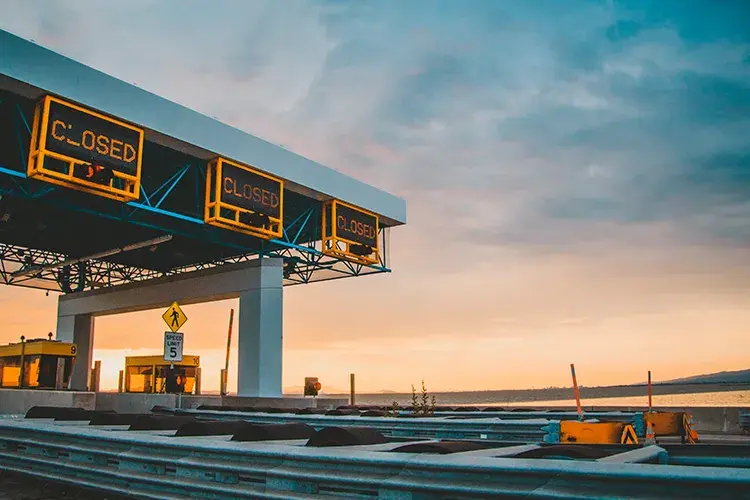
In Croatia, there is a route-dependent mandatory toll on motorways and specific dual carriageways. Charges vary by vehicle type and are payable at toll booths.
| Valid for vehicles | Route | Payment options |
| Passenger cars, trucks, buses |
AZM motorways |
Payment can be made on site with cash, credit card or UTA Card |
| Passenger cars, trucks, buses |
HAC motorways |
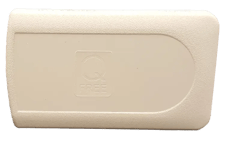
UTA One® next toll box; UTA One® Move toll box; ENC OBU toll box |
Trucks tolls in Croatia
In Croatia, heavy goods transport is subject to a route-dependent mandatory toll on motorways and select dual carriageways. The toll is collected by the operators Hrvatske autoceste d.o.o. (HAC) and Autocesta Zagreb–Macelj Ltd. (AZM). Charges are based on vehicle category, number of axles and distance travelled. Transport companies should therefore check applicable toll regulations in advance to avoid costs and waiting time at toll booths.
Vehicles weighing over 3.5 tonnes are subject to tolls
All trucks and buses with a total permissible weight of more than 3.5 tonnes are subject to tolls in Croatia. The toll is calculated based on distance driven and vehicle class. The Croatian system distinguishes between several categories, which are primarily based on number of axles and vehicle height.
Payment is made at toll booths either using cash, credit card or electronic on-board units (OBUs) that enable automatic invoicing. Freight forwarders that frequently use roads in Croatia should use an electronic toll device to avoid waiting and receive discounts.
Toll-exempt vehicles
Only certain vehicle groups in Croatia - for example, military , police and fire, emergency response and rescue services, and vehicles used for humanitarian services, are exempt from tolls.
Private or commercial vehicles, even if empty, are generally subject to tolls. An exception for agricultural or municipal vehicles does not exist in Croatia unless granted special permission.
Carbon toll
There is currently no CO₂ toll in Croatia. Charges are based on the vehicle category, number of axles and distance driven, but not on emissions.

Car tolls in Croatia
In Croatia there is a mandatory toll for cars, without exceptions. Tolls are charged on motorways and some dual carriageways. When driving onto the motorway, drivers take a toll ticket that is returned when they exit. The toll charge is based on distance covered and vehicle category.
Payment can be made at toll booths using cash, credit card or the electronic ENC system. The electronic method enables faster journeys and occasionaldiscounts for frequent drivers. There is no vignette in Croatia as in other European countries – billing is always route-dependent.
Overview of toll routes
In Croatia, the use of motorways is billed by two providers: HRVATSKE AUTOCESTE d.o.o. (HAC) and Autocesta Zagreb–Macelj Ltd. (AZM).
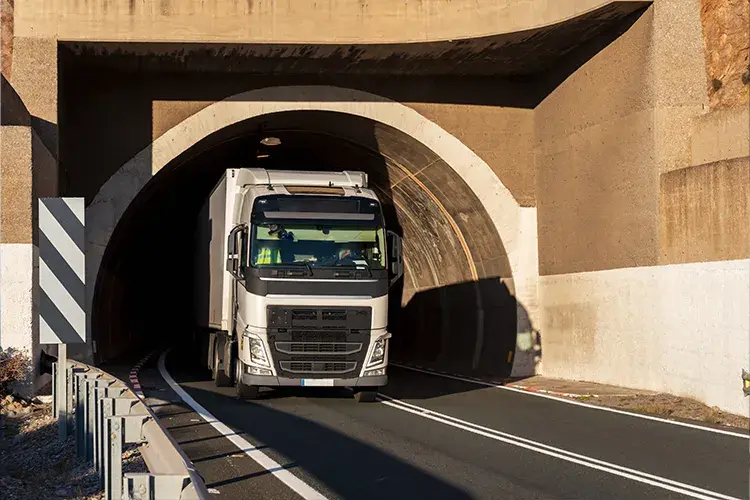
Both cars and trucks are subject to road tolls – charges are based on vehicle category, number of axles and distance travelled. Below you’ll find information on special tolls for tunnels.
Tunnel
Toll payment
In Croatia, there are different payment options depending on vehicle type:
For vehicles up to 3.5 tonnes
All cars, motorcycles and light commercial vehicles are subject to tolls on motorways, certain dual carriageways and select bridges or tunnels. Billing is route-dependent: When driving onto the motorway, drivers take a ticket that is returned to the toll booth when they exit. Payment is possible via cash, credit card or the electronic ENC system.
This system is simple, flexible and user-friendly, especially for occasional drivers who use chargeable toll routes sporadically.
For vehicles over 3.5 tonnes
All trucks over 3.5 tonnes are subject to tolls on motorways and select dual carriageways. Fees are based on vehicle class, number of axles and distance covered.
The following options are available for invoicing:
-
Online portals and apps for digital payment
-
Toll stations where fees can be paid directly
-
Electronic ENC system that enables automatic billing
The system is transparent and route-dependent, which helps companies manage their transport costs.