 Login
Login




For many small and medium-sized businesses, making the transition to e-mobility is a complex consideration – too many unanswered questions, too little guidance. Is the switch really worth it? What costs will we face? And does e-mobility fit our business model?
At the same time, the pressure to act is mounting. Legal requirements for CO₂ reductions, rising fuel prices, and the growing environmental awareness of customers and business partners are making sustainable mobility a business imperative.
This article outlines the five most important factors that small and medium-sized businesses should consider when deciding for or against e-mobility.
1. Economic viability & cost-benefit ratio
A choice of powertrain depends on your company’s business requirements. Three concepts are compared below:
- Purchase costs vs. operating costs
Electric vehicles are often more expensive to purchase than comparable internal combustion engine vehicles. However, this is offset by lower operating costs: electricity is usually significantly cheaper than fuel, and maintenance costs are lower. - Incentives & tax benefits
Government incentive programmes, reduced company car taxes and GHG quotas offer additional savings potential. These factors should be considered from the beginning. - Total cost of ownership (TCO)
In the end, it’s the big picture that counts: A TCO comparison shows that electric vehicles become financially worthwhile in as little as 2–3 years, depending on usage.
2. Usage profiles & mobility requirements
- Range & driving performance
Electric vehicles now offer ranges suitable for everyday use. They are ideal for inner-city or regional applications - but for frequent long-distance trips, a mixed fleet may be a more sensible option. - Flexible approaches
The transition can be implemented gradually – for example, through pilot projects with individual vehicles. Hybrid solutions are also possible, in which electric and internal combustion engine vehicles coexist. - Use analysis tools
Digital fleet analysis tools help identify suitable applications for electric vehicles and develop data-driven transition strategies.
3. Charging infrastructure & energy supply
A robust charging infrastructure is the backbone of any successful e-mobility strategy. Companies must address a variety of charging scenarios – at home, at work and on the go – while ensuring a sustainable energy supply. Each of these areas presents its own requirements and opportunities.
- Charging on corporate premises
Workplace charging provides reliability and control, which is important for employees with fixed work locations. For larger fleets, access, billing and load management should be centrally organised. Modern workplace charging solutions enable smart control, secure billing, and – if desired – even the ability to open up company charging points to external users with dedicated rates and access times. - Home charging
Many employees charge their vehicles at home, using their own electricity. This makes a legally compliant solution for automated tracking and reimbursement all the more important. This is the only way to clearly separate billing and minimise administrative overhead. - Charging on the go
Whether on a business trip or at a client meeting, access to public charging facilities is essential. It’s important that these charging sessions are integrated into a central billing system – ideally via a charging card or app. - Sustainable power supply
Choice of energy source has a direct impact on carbon footprint. Charging points at work or at home should, wherever possible, be powered by certified green electricity – a plus in terms of ESG and external communication.
4. Digitalization & process optimisation
Digitalisation is the key to making electric mobility efficient, transparent and scalable. For small and medium-sized businesses in particular, the use of digital tools helps reduce manual processes, automate billing and make informed decisions based on real-time data. Companies that rely on integrated systems from the start not only streamline their day-to-day operations but also lay the foundation for future-proof fleet management.
- Automated billing
Digital solutions enable charging and refuelling transactions to be automatically recorded, billed and documented in a legally compliant manner, regardless of where charging takes place. - Interfaces & integration
Modern systems can be directly integrated with accounting, HR or fleet management – reducing manual processes and increasing efficiency. - Full transparency
Digital reports provide insight into usage, costs and carbon footprint, enabling targeted management and optimisation of the fleet.
Solutions that digitally map the entire process, from technical data collection and integration with accounting and fleet management to employee engagement and training, are particularly effective. Relying on a 360° platform not only reduces manual work but also creates a seamless system with future potential.
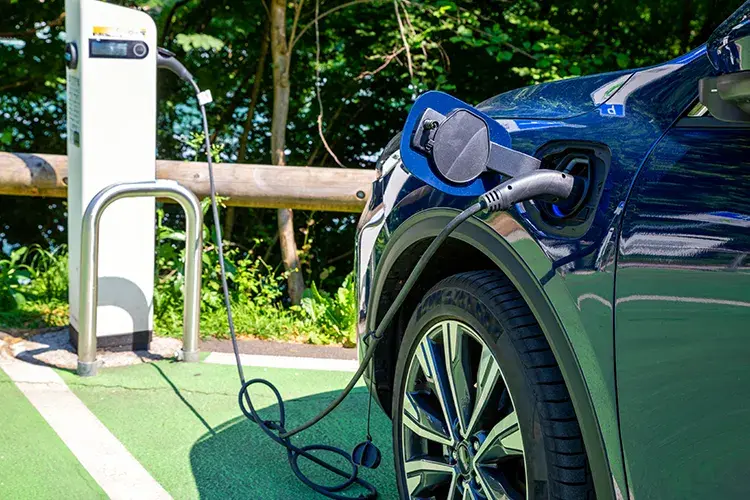
5. Sustainability & strategic benefits
- Meeting regulatory requirements
E-mobility helps meet environmental standards and prepare for upcoming regulations such as CO₂ limits or driving bans. - Sustainability as a competitive advantage
An electrified fleet supports ESG goals, strengthens the employer brand, and can be a selling point in tenders or investor presentations. - Ready for the future
The mobility transition is in full swing. Those who act now can gain a strategic advantage over the competition.
Is e-mobility worth it – and how do you get started?
E-mobility offers significant opportunities for small and medium-sized businesses, from economic benefits and greater sustainability to regulatory certainty. However, the transition requires careful planning: By taking a holistic view of driving patterns, infrastructure, digitalisation, and total costs, companies can lay the groundwork for an informed decision.
It’s important to gain clarity early on – for example, through pilot projects or digital tools – and to rely on partners who can make the transition easier.
Whether electric mobility is worthwhile for your company depends on factors such as:
- Type and intensity of vehicle use
- Local energy prices and charging infrastructure
- Internal processes, IT systems, and responsibilities
Common obstacles:
- Lack of an overview of suitable vehicle models and use cases
- Unclear responsibilities within the company
- Concerns about time-consuming billing processes – particularly when charging at home
It’s crucial not just to choose isolated, one-off solutions, but to adopt a comprehensive strategy with a partner who supports you every step of the way, from consulting and technology to billing. For small and medium-sized businesses in particular, a 360° solution can make the difference between a pilot project and successful scaling.
Best practices from SME projects:
- Start with small pilot fleets
- Involve and train employees early on
- Clarify billing issues with solution providers from the start
- View digitalisation as an opportunity for greater control and less effort
How UTA Edenred can help
UTA Edenred offers companies a comprehensive 360° solution to manage charging and refuelling processes efficiently, and in compliance with legal requirements; and centrally – whether at work, at home, or on the go. As an integrated mobility partner, UTA Edenred not only provides support for technical tracking and billing but also assists with implementation, system integration and employee training. This results in a seamless mobility solution – from consulting to digital billing.
The platform combines all functions into a single system: access to a Europe-wide charging network, management of private and company charging points, and automated billing for charging sessions.
Benefits at a glance:
- 360° mobility solution: UTA Edenred not only handles operational charging and refuelling management but also offers a comprehensive, all-in-one package: from strategic consulting to technical integration and infrastructure setup, as well as employee training and ongoing operational support.
- One card for everything: A single card for all mobility requirements – whether public charging, home charging, workplace charging, or simply fuelling.
- Workplace charging: Charging processes at company locations can be managed efficiently, transparently and in compliance with tax regulations – from the installation of AC and DC charging stations and intelligent load and access management, to centralised billing. Upon request, company charging points can also be made available for semi-public use, with customisable rates and time-controlled access.
- Home charging included: Automated tracking and reimbursement of charging sessions at home – legally compliant and tax-compliant.
- Digital transparency: Intuitive dashboards, reports and exportable tax data at the click of a button.
- Seamless integration: Can be connected to existing ERP, fleet management or accounting systems.