 Login
Login


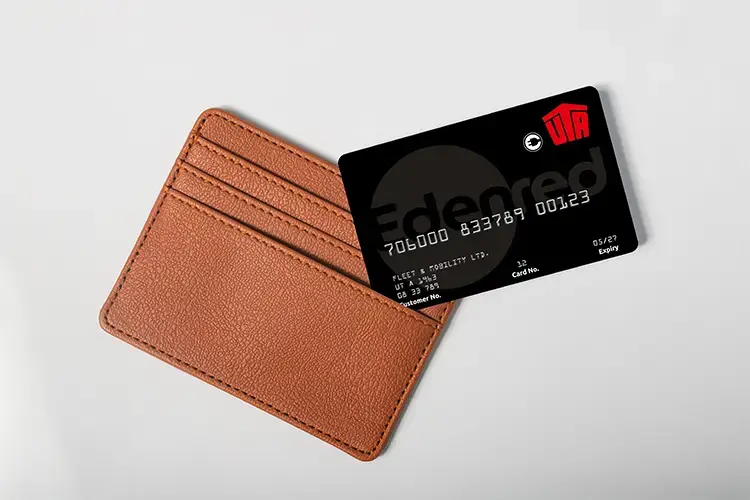

Fuel cards and on-board units (OBUs) have become an indispensable part of everyday fleet management. They enable cashless processing of fuel and toll costs – saving time and making life easier for drivers.
At the same time, they provide fleet managers with important monitoring capabilities and ensure greater cost transparency. However, as their use increases, so too does the risk of fuel card fraud. Since fuel costs can account for up to 30% of a fleet’s total expenses, tampering or misuse can pose serious financial risk. In this article, we’ll show you how to protect your fuel cards to prevent fraud.
Table of Contents
Types of fuel card fraud
Measures to prevent fuel card fraud
Preventing fuel card fraud: Tips for fleet managers
What is UTA Edenred doing to combat fuel card fraud?
Types of fuel card fraud
| Types | Explanation |
| Fraud involving lost or stolen cards | Use of stolen cards or PINs before the card is blocked; in online systems, this often occurs without a PIN. |
| Collusion at a fuel station | Drivers and station staff collude to arrange payments for fuel that was not purchased or for excessive amounts of fuel, e.g., “dieselization.” |
| Misuse by drivers | Fuel cards are used for other vehicles or for concealed purposes, e.g., extra fuel tanks or forged purchase receipts. |
| Internal fraud | Employees act alone or with external partners to steal or manipulate card or company data. |
| Fraud involving mailed cards | Cards are intercepted during shipping and misused before they can be blocked. |
| Identity and application fraud | Criminals apply for cards using forged or stolen company data and use them fraudulently. |
| “Card-not-present” fraud | Card or payment data is stolen online and misused for digital toll or fuel purchases. |
| Vehicle cloning | License plates are copied and used on vehicles to fraudulently avoid paying for fuel, tolls or parking fees. |
Measures to prevent fuel card fraud
-
Collaboration with international authorities and organisations such as the FICFIB and Europol to combat cross-border fraud
-
Continuous monitoring and optimisation of UTA Edenred’s own products, services and IT processes
-
Implementation of security features such as transaction notifications
-
Regular training and continuing education for customer service staff in the area of fraud prevention
-
Prompt and targeted communication with authorities, partners and affected customers in the event of fraud
-
Raising awareness among customers and partners about the risks of fuel card fraud through targeted education
Preventing fuel card fraud: Tips for fleet managers
1. Reporting suspicious behavior or incidents
In the event of fraud attempts, lost cards, or PIN misuse, employers should immediately file a report—both in the country where the incident occurred and at the company’s headquarters. This expedites cross-border cooperation among authorities.
2. Reviewing Transactions
Employers should review invoices and receipts promptly to ensure that all transactions are in order. In addition, vehicle fuel consumption reports should be monitored to identify instances of excessive fuel consumption.
3. Educating and Raising Awareness Among Drivers
Employers should clearly inform their drivers of their personal responsibility and the criminal consequences of fuel card misuse. A written acknowledgment of understanding these rules is recommended.
Preventing fuel card fraud: Tips for drivers
1. PIN security
Memorise your PIN and never share it with anyone. Do not write it down, do not store it digitally, and shield it from prying eyes when entering into a PIN pad.
2. Card security
Drivers should never leave their card unattended in the cab of their vehicle or on company premises. Unattended cards run the risk of being copied without your knowledge.
3. Stay alert
When using your fuel card, watch for tampering at fuel pumps—especially in remote areas. Choose pumps that are clearly visible and close to the checkout area. If possible, pay at the store yourself and keep an eye on your surroundings.
What is UTA Edenred doing to combat fuel card fraud?
UTA Edenred prioritises the security of its fuel and service cards. Our specialist security team monitors transactions in real time and immediately notifies customers of suspicious activity. In addition, UTA offers a telephone tip-off service and continuously develops effective strategies for detecting and preventing fraud. Through close collaboration with government agencies, the FICFIB, and attorneys, UTA Edenred ensures comprehensive protection and the swift resolution of fraud cases.
Conclusion: A secure fuel card – optimally protected with UTA Edenred
With UTA CardLock security capabilities, real-time transaction notifications and UTA’s specialist Fraud Detection Team, you can effectively combat fuel card fraud. Complemented by the digital solution UTA EasyFuel®, you’ll enjoy greater convenience and security. Protect your business now and request a no-obligation quote.