 Login
Login


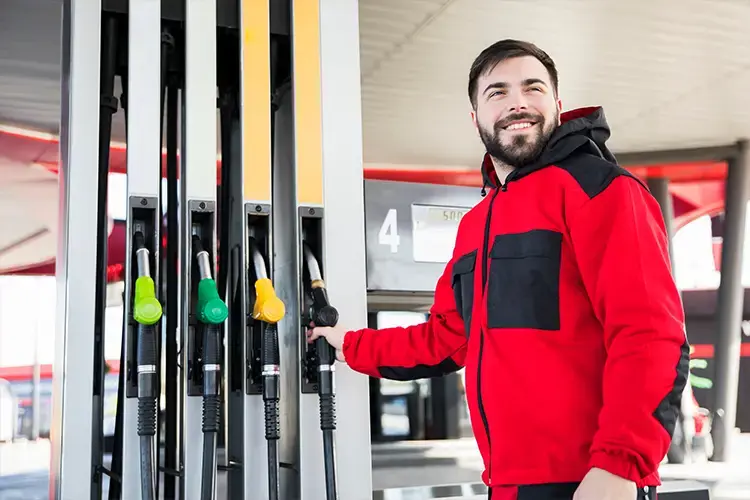

Filling up often feels like a gamble: Prices are high in the morning, lower in the evening, and then everything changes the next day. The good news is, price fluctuations are usually no coincidence.
If you know a few simple rules, you can save money on fuel without having to switch vehicles or give up your mobility. That’s exactly what this guide is all about: When should you fill up, when can you get the best price, and which strategies really work?
Table of Contents
When is the best time to fill up?
Fuelling with a fuel card: How savings are achieved
Save with the UTA Edenred Drive fuel app
When is the best time to fill up?
Timing is often the most effective way to save. Fuel prices fluctuate not only due to oil prices and exchange rates, but also because of daily patterns, peaks in demand and dynamic price adjustments.
Timing: Avoid rush hour; plan ahead instead
The basic rule is to avoid rush hour and “convenience windows.” Many people fill up in the morning on their way to work, at lunchtime between appointments, or in the evening after work. That’s when demand – and prices – are highest. Those who fill up countercyclically, on the other hand, are more likely to pay less.
Another tip is to plan instead of react. The most expensive refuelling decisions happen when your fuel gauge is flashing. Then you fill up at the next available price – not the best one. By following a simple routine (e.g., checking when the tank reaches a certain level or on set days), you’ll end up filling up during a better price window.
Price differences by time of day
When it comes to the best time to fill up, time of day is usually the most significant factor. In many regions, prices tend to be higher in the morning, with cheaper time windows later in the day. This is primarily due to demand: morning rush hour and “quick refuelling” on the way to work create a convenient time window with high volume, which supports price levels.
In Germany, fuel prices change several times a day. In Austria and Switzerland, the fluctuations are less abrupt, but regional factors (e.g., tourism, urban/rural areas, proximity to motorways) contribute to pricing.
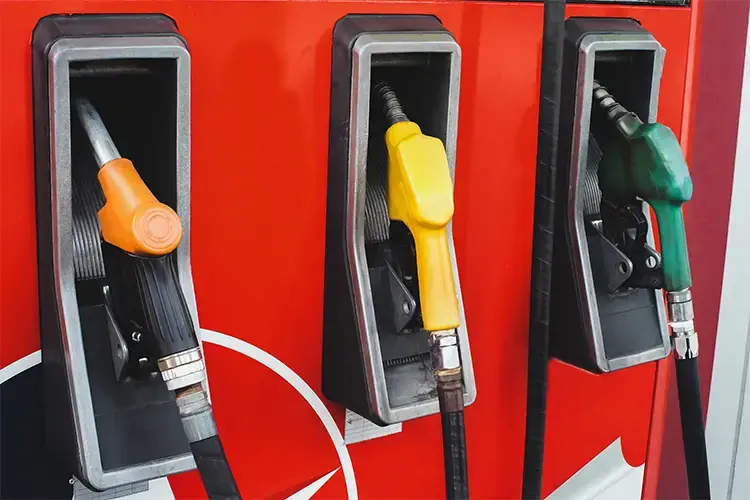
On weekends, the price landscape depends more heavily on location. In many areas, Fridays are characterised by weekend traffic and travel flows, which can raise prices. Saturdays tend to be more stable in some regions, while Sundays can see prices rise again depending on the infrastructure (e.g., tourist areas, arterial roads, highway interchanges).
Fuelling with a fuel card: How savings are achieved
When fuelling with a fuel card, the savings aren’t automatically generated by the card itself, but rather by the underlying framework: discount models, network advantages, monitoring and processing costs.
1. Discounts and terms instead of ‘wishful thinking’
The biggest direct lever is discounts or price reductions per litre. These terms are tied to the provider, the fuel station network, and, if applicable, purchase volumes. The bottom line is that a small discount is of little use if it means refuelling more frequently at more expensive locations. A discount combined with affordable stations beats a larger discount in an expensive network.
2. Network coverage and location selection
Many fuel cards operate within an acceptance network. This has two effects:
-
Predictability (e.g., suitable stations along commuting and major travel routes)
-
Comparability (e.g., choice between multiple stations in a network instead of the “next-best” option)
The better the network coverage along your routes, the greater the potential to consistently avoid highway surcharges and opt for cheaper locations instead.
3. Saving time = indirectly save money
Fuel cards often reduce friction in practice: there’s no need to collect receipts, fewer stops at the pump, and centralised billing (e.g., monthly consolidated invoice). For companies and self-employed individuals, this reduces accounting overhead. For commuters, the benefits include faster refuelling, fewer detours and fewer spontaneous stops.
4. Control and protection against additional costs
Many fuel cards offer limits and rules (e.g., fuel only, daily/monthly limits, PIN/driver ID). This reduces misfuelling, misuse or unnecessary additional purchases – a classic “cost-saving effect” that becomes particularly relevant when there are multiple drivers or vehicles.
Save with the UTA Edenred Drive fuel app
A core feature of the UTA Edenred Drive app is an integrated station finder for the UTA Edenred acceptance network, providing details on opening hours, available fuel types, and services, as well as a filter that enables you to search by brand, fuel type, or stations equipped with car washes or repair shops.
Along a given route, for example, you can identify stations that are cheaper within the respective network rather than stopping at the first (and often more expensive) location. In everyday life, therefore, the benefit is about better timing and better location choices.