Tolls in Norway

tolls-norway-uta-edenred

In Norway, there is a mandatory toll for cars and trucks on motorways, bridges, tunnels and designated city toll zones. Billing is undertaken via the electronic AutoPASS system, which enables simple, transparent and automated processing. The system supports drivers and transport companies in planning toll costs while helping to finance and maintain the road network.

  • information-circle-interface-essential-red

    Mandatory toll for cars and trucks on toll routes

  • information-circle-interface-essential-red

    AutoPASS electronic toll system, no cash payment required

  • information-circle-interface-essential-red

    Reduced rates for low-emission and electric vehicles

tolls-norway-card

General information

Tolls in Norway are an important part of the financing and maintenance of the road and motorway network. They ensure that roads remain safe, developed and efficient. The electronic AutoPASS system, which organises billing on toll roads, bridges and tunnels, is responsible for collecting and managing the tolls.

The tolls are collected via the open AutoPASS system: All vehicles, including cars, motorcycles and trucks, pay the fee depending on vehicle class, weight and emissions standard. Additional fees for specific tunnels, bridges or urban zones are also billed via the system.

Norway levies a carbon component, with higher charges for vehicles with greater CO₂ emissions, while low-emissions and electric vehicles benefit from reduced rates. The system enables transparent, efficient and fair billing for all road users and offers cost control to private and commercial drivers.

delivery-truck_multicolor Vehicles subject to tolls

In Norway, all vehicles are required to pay a toll on motorways, bridges, tunnels and many city ringroads, regardless of weight. Vehicles only benefit from reduced rates or exemptions if they are particularly low in emissions or electrically operated. 


Valid for vehicles Route Payment options
Passenger cars

Motorways, bridges, tunnels and ferries

AutoPASS

HGV > 3.5 tonnes

Motorways, bridges, tunnels and ferries

Toll box UTA One® next; AutoPASS

streamline-icon-truck-cargo-1@1200x1200 (2)HGV toll in Norway

In Norway, all road traffic is subject to a mandatory nationwide toll. The country operates an open toll system in which all vehicles are automatically recorded via the electronic AutoPASS system. Toll stations are located on motorways, dual carriageways, bridges, tunnels and in many cities. The toll applies to all vehicle types – from cars to buses and heavy goods vehicles. For transport companies, it is therefore crucial to register vehicles in a timely manner and to install a toll device to avoid fines and delays.

Vehicles weighing over 3.5 tonnes are subject to tolls

In Norway, all vehicles with a gross weight of over 3.5 tonnes are subject to tolls. These include trucks, buses and heavy goods vehicles. A mandatory transponder regulation applies to these vehicles, e.g., they must be equipped with a valid toll device and have an agreement with a recognised toll service provider. The toll is automatically collected while passing through a toll booth without having to stop.

The amount of the toll depends on various factors, including total weight, vehicle class, number of axles, emissions standard and type of route travelled. Vehicles over 3.5 tonnes are usually assigned to tariff group 2, which incurs higher fees than lighter vehicles. Environmentally friendly commercial vehicles, particularly electric and hybrid trucks, benefit from reduced rates. For commercial vehicles, the mandatory toll applies irrespective of the origin of the company or registration number.

Toll-exempt vehicles

In Norway, there are no exemptions to the mandatory toll. All vehicles, regardless of weight, drive type or use, are obliged to pay tolls. Exemption can only be applied for in exceptional cases - for example, for military or state vehicles. Vehicles for humanitarian or agricultural use are generally subject to tolls.

Carbon toll

Norway takes a CO₂ component into account when calculating road tolls. This means that vehicles with high CO₂ emissions are subject to a higher charge while low-emissions or zero-emission vehicles benefit from lower rates. The aim of this measure is to promote the use of climate-friendly vehicles and to achieve national climate targets in the transport sector.

The system integrates the CO₂ assessment into the existing AutoPASS billing, meaning separate carbon toll registration is not required. For freight forwarders and logistics companies, this means that investments in modern, environmentally friendly fleets pay off financially as toll costs fall in the long term.

Toll and ferry costs in Norway? With UTA One® next everything is handled automatically.

uta-one-next-car

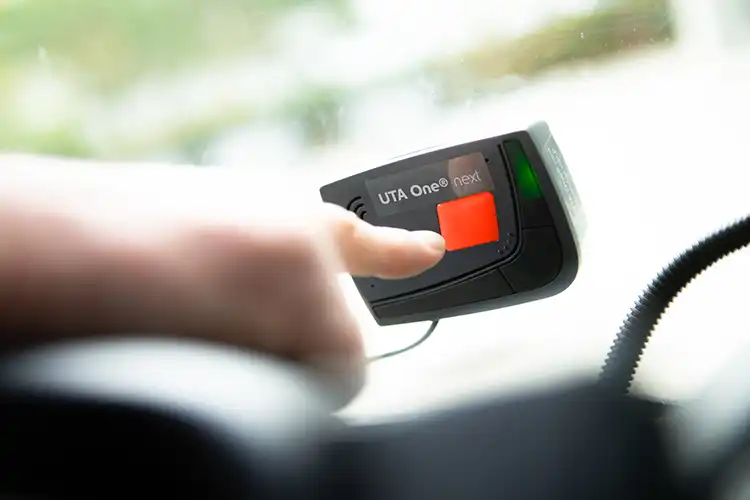
Travel comfortably and efficiently in Norway with the UTA One® next EETS toll box: All tolls and certain bridge, tunnel and ferry costs are automatically billed via a single OBU – without having to stop at a terminal or purchase tickets. This saves you time on toll roads and national ferry routes.

Another benefit: you will automatically receive a 10% discount on regular ferry prices. All fees are itemised on a single invoice – along with services such as fuelling and telematics data. Your journeys can be conveniently controlled via the smartphone app or directly at the box.
Combine your UTA One® next contract with a prepaid solution and get discounts of up to 40%.

Contact us to learn how to make journeys through Norway even more cost effective.

streamline-icon-carCar tolls in Norway

Norway does  not charge a general motorway toll, but there is a  toll on certain routes,  bridges, tunnels  and in many cities. This should be taken into account in route planning, as the toll varies depending on  vehicle class  and usage. Billing is undertaken  automatically by number plate recognition  or by an  AutoPASS chip that enables electronic billing.

For  cars up to 3.5 tonnes of gross vehicle weight  and camper vans under 3.5 tonnes, vehicle class 1 applies, while heavier vehicles fall into higher classes. Motorbikes in Norway are not subject to tolls. In addition, there are  city tolls in  Oslo, Bergen, Trondheim and Bodo, for example, which may be time-dependent and based on a vehicle’s environmental impact.

Toll fees are used to finance infrastructure projects and are paid at toll offices or by invoice. Failure to pay can lead to  significant fines. The  AutoPASS system facilitates toll payment  through automatic recording and central invoicing, which guarantees easy and transparent use of toll roads in Norway.

streamline-icon-trip-distance@1200x1200 Overview of toll routes

In Norway, the use of motorways, bridges, tunnels and city rings is billed via the electronic AutoPASS system. The mandatory toll applies to cars and trucks, with motorbikes exempted. Fees are based on vehicle class, weight and emissions standard, with low-emissions vehicles often benefiting from reduced rates.

The toll is collected at more than 300 toll booths with blue signs featuring a camera symbol and “Kr” for Norwegian crowns. The vehicle registration number is recorded electronically; payment on site is not possible.

tolls-norway-uta-edenred (2)

ferry-multicolorFerries

In Norway, ferries are an important part of the transport network as they connect numerous coastal towns and islands.
For an overview of all ferry connections in Norway, please visit the autopass page .

streamline-icon-car City toll

Towns with a city toll have a 1-hour rule that only charges one toll journey per hour in a multi toll area.

streamline-icon-credit-card-give Toll payment

In Norway, tolls are paid via the electronic AutoPASS system, which enables simple, transparent settlement. Vehicles are recorded automatically via cameras or toll boxes. Cash payment at toll booths is not possible.

For vehicles under 3.5 tonnes

Cars and camper vans up to 3.5 tonnes are subject to tolls on most motorways, bridges, tunnels and in city toll zones. Billing takes place automatically via the registration number or an AutoPASS transponder. Owners of vehicles without transponders will be billed retrospectively. In cities with several toll booths, the 1-hour rule applies, in which only one toll payment is charged per hour within the respective area. Low-emissions vehicles benefit from reduced rates or exemptions in many regions.

For vehicles over 3.5 tonnes

Trucks over 3.5 tonnes are generally charged on toll roads. The toll is calculated depending on the route and depends on vehicle class, weight, number of axles and emissions standard. Payment is made via on-board units (OBUs), AutoPASS transponders or via authorised toll service providers such as Epass24. Transport and logistics companies can bill fees via online portals or apps, which help to facilitate cost control.

Discover UTA toll solutions

Discover neighbouring countries where tolls apply