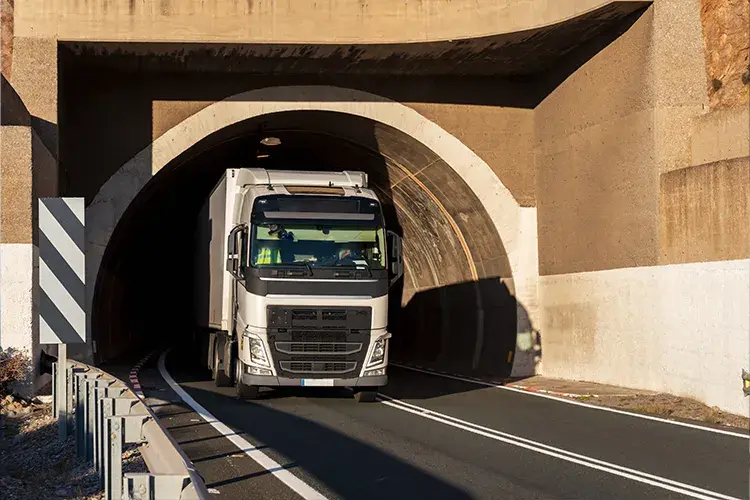
In Italy, trucks over 3.5 tonnes are subject to tolls on almost all motorways. Charges are calculated based on distance driven, number of axles and emissions class (Euro 0–6). Italy uses both closed toll systems with entry and exit stations as well as open systems without barriers where the toll is charged at a flat rate for certain sections.
On many routes, the toll is unavoidable, as the motorway network is almost completely chargeable. Free alternatives are only available on some state roads (Strade Statali) or on local routes.
Vehicles over 3.5 tonnes subject to tolls
For trucks, buses and heavy-duty vehicles over 3.5 tonnes, there is a basic mandatory toll on the entire motorway network. The classification depends on vehicle type, weight, number of axles and emissions class.
There are various payment options available:
-
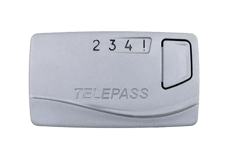
Telepass – the electronic toll system enables automatic recording and billing without having to stop at toll booths.
-
Cash or card payment – at toll booths with barriers.
-
Free-flow systems – on certain sections, registration is undertaken via identification of the number plate; payment can then be made via the toll device.
Special routes such as the Brennerpass, Mont Blanc tunnel or Fréjus tunnel are subject to additional fees.
Toll-exempt vehicles
Excluded from the mandatory toll are, among other things, municipal emergency vehicles (e.g. police, fire, rescue services), agricultural vehicles, as well as public service vehicles.
Carbon toll
An independent carbon toll has not yet been introduced in Italy, but is planned. In the future, the CO₂ emissions of a vehicle will be factored into the toll amount. The aim is to promote the use of low-emission and climate-friendly trucks and thus promote the reduction of CO₂ in freight transport.
 Login
Login





.svg)