In Austria, there is a general mandatory toll on all motorways and dual carriageways. The toll system thus contributes significantly to the financing and maintenance of transport infrastructure. The toll is managed by ASFINAG (Autobahnen- und Schnellstraßen-Finanzierung-AG) and is based on technically permissible total mass (tzGm) of a vehicle.
While vehicles over 3.5 tonnestzGm must be equipped with an on-board unit (OBU),cars, motorbikes and camper vans up to 3.5 tonnes require a valid vignette that must be properly attached or digitally acquired in a timely manner.
Mandatory tollfor vehicles on motorways and dual carriageways
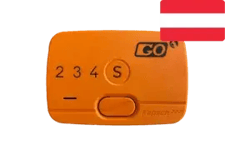
Toll box (OBU) required for vehicles over 3.5 tonnes tzGm
Mandatory vignette for cars, motorbikes and motor homes up to 3.5 tonnes
In Austria, the toll system supports the financing of transport infrastructure and contributes to the preservation, modernisation and expansion of motorways and dual carriageways. ASFINAG is a state-owned company responsible for collecting and managing the toll.
Since the introduction of the toll system, the costs for construction, operation and maintenance of Austrian dual carriageways are mainly covered by toll fees. The system distinguishes between a time-dependent vignette toll and route-dependent GO toll. In addition, a separate road toll is charged on some Alpine crossings, tunnels and bridges.
As part of European climate targets, Austria is continuously working on integrating CO₂ components into toll calculations in order to promote environmentally friendly vehicle technologies and reduce CO₂ emissions in the transport sector.
Vehicles subject to tolls
In Austria, almost all vehicles are subject to a mandatory toll – different systems apply depending on permissible total weight and vehicle type. Vehicles up to 3.5 tonnes tzGm require a vignette to drive on motorways and dual carriageways. For vehicles above 3.5 tonnes tzGm, such as trucks and buses, the route-dependent GO toll is billed via an on-board unit (OBU).
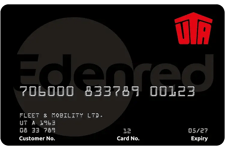
Vignette (Processing via UTA Card) for motorways and dual carriageways; UTA Card for road toll
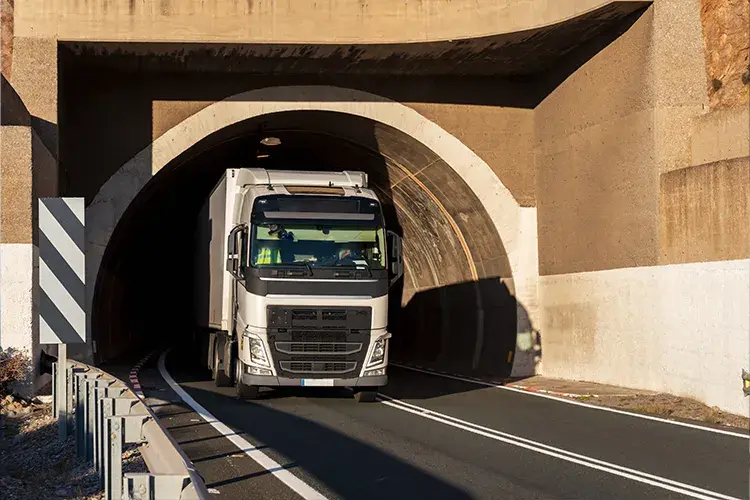
Truck tolls in Austria
In Austria, motorways and dual carriageways are subject to a mandatory toll imposed by the state-owned company ASFINAG. The toll serves to finance, maintain and expand national transport infrastructure. Vehicles up to 3.5 tonnes tzGm, such as cars, require a digital vignette, while trucks over 3.5 tonnestzGm are billed via an on-board unit(OBU).
Vehicles over 3.5 tonnes subject to tolls
Trucks and vehicles over 3.5 tonnes tzGm are subject to OBU requirements in Austria. The OBU automatically records distance travelled and calculates the charges. Costs vary depending on the route, number of axles and carbon emissions class of the vehicle.
Toll-exempt vehicles
The mandatory toll does not apply to rescue, police, fire brigade and emergency response vehicles, as well as certain agricultural and forestry vehicles. Low-emissions or alternative drive-powered vehicles can also benefit from discounts. Vehicles that transport humanitarian aid supplies can be exempted from tolls on request.
Carbon toll
The CO₂-differentiated toll takes into account the emissions of the vehicle. Vehicles with higher CO₂ emissions pay higher toll rates, while climate-friendly vehicles receive discounted toll rates. The goal is to make freight transport more sustainable and promote environmentally friendly technologies. Official information on the CO₂ regulation can be found on the ASFINAG website and CO₂ calculator.
Car tolls in Austria
In Austria, cars, motorbikes and camper vans up to 3.5 tonnes tzGm (technically permissible total weight) require a valid motorway vignette when driving on motorways and dual carriageways subject to vignette charges. This must be properly affixed to the windscreen or purchased online in a timely manner as a digital vignette.
Vignettes are available in different durations, enabling occasional drivers and frequent drivers can find a suitable solution. The digital vignette eliminates the need for manual attachment, as registration takes place in the system.
The cost of the vignette depends on the vehicle type and validity period. Vehicles with an alternative drive or camper vans are subject to special regulations depending on weight class. Driving without a valid vignette is subject to significant penalties, which can be imposed on site or retrospectively.
The Austrian car toll thus offers asimple, transparent and legally secure option to use motorways and dual carriageways while avoiding fines.
Overview of toll routes
Toll routes in Austria include all ASFINAG-operated motorways and dual carriageways. In addition, special toll fees apply to certain tunnels, Alpine crossings and bridges, which are charged regardless of the vignette or GO toll.
ASFINAG provides an up-to-date overview of the toll network and information on specific routes on its website or via PDF download. More information on the ASFINAG route toll.
Tunnel
P. 16 Arlberg road toll (ASFINAG special toll route) – More information
In Austria, there are different solutions for paying the toll, depending on the vehicle you are travelling with:
For vehicles up to 3.5 tonnes
The toll is paid via digital vignettes that can be purchased online, at fuel stations or in border shops.
There are 1-day, 10-day, 2-month and annual vignettes that are attached to windscreens or stored as digital vignettes.
A vignette is a simple, quick and practical solution for occasional drivers.
For vehicles over 3.5 tonnes
The toll is paid via the GO toll system, which is based on GPS route tracking.
Vehicles can invoice the toll via various toll media. From 3.5 tonnes, there is a duty to carry an electronic device for toll payment.
Billing is route-dependent, transparent and enables companies to precisely manage costs.
This system ensures that both occasional drivers and logistics companies can pay the toll in Austria simply, flexibly and legally.
Are you driving through other European countries in addition to Austria? Then we recommend UTA One® next, which automatically records all tolls and processes them using via post-paid procedure.
 Login
Login






.svg)